
Brihan Karan Sugar Syndicate Private Limited v/s Yashwantrao Mohite Krushna Sahakari Sakhar Karkhana
Name of the Case- Brihan Karan Sugar Syndicate Private Limited v/s Yashwantrao Mohite Krushna Sahakari Sakhar Karkhana Civil Appeal No. 2768 of 2023 Decided On, 14 September 2023 At, Supreme Court of India By, THE HONOURABLE MR. JUSTICE ABHAY S. OKA & THE HONOURABLE MR. JUSTICE RAJESH BINDAL Published In:- Published In 2023 (6) AIR
Borosil Glass Works v/s 0.P. Batra
Name of this Case -Borosil Glass Works v/s 0.P. Batra Interim Application Appeal No. 2754 of 1997, Suit Appeal No . 484 of 1995 Decided On, 13 January 1998 At, High Court of Delhi By, THE HONOURABLE MR. JUSTICE S.N. KAPOOR For the Appearing Parties: Manmohan Singh, S.K. Bansal, Advocates. ISSUE Whether or not the

American Home Products Corporation v/s Private Limited and Another
Name of the case-American Home Products Corporation v/s Private Limited and AnotherCivil Appeal No. 2159 of 1970Decided On,30 September 1985At,Supreme Court of IndiaBy, HON’BLE JUSTICE A. N. SEN AND HON’BLE JUSTICE D. P.MADON Published In1985 (2) Scale 933, 1985 (S3) SCR 264, 1986 (1) CCC 665, 1986 (1) SCC465, 1986 AIR (SC) 137 ISSUE –
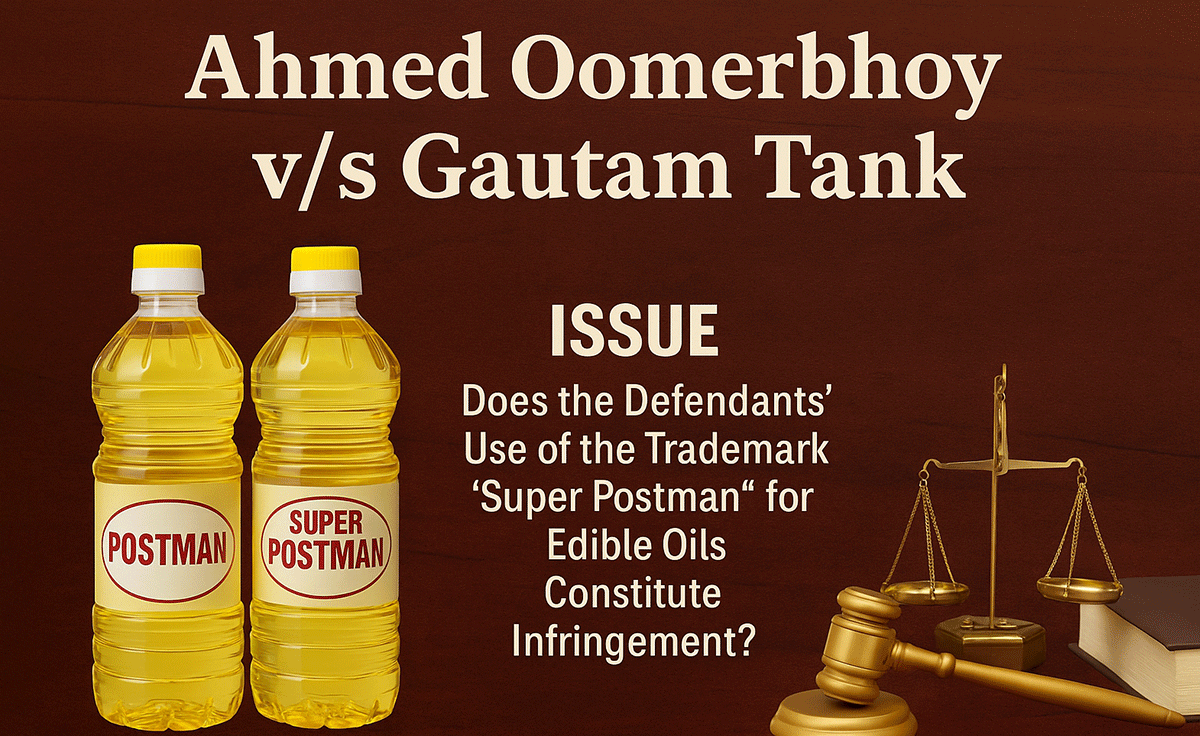
Ahmed Oomerbhoy v/s Gautam Tank CS(OS) No.806 of 2005
Name of the Case – Ahmed Oomerbhoy v/s Gautam TankCS(OS) No.806 of 2005Decided On,20 December 2007At,High Court of DelhiBy, THE HONOURABLE MR JUSTICE ANIL KUMARFor the Plaintiff: Praveen Anand, Advocate. For the Respondent: Ms.Pratibha M. Singh & M.K. Minglani, Advocates. Published In2008 (146) DLT 774, 2008 (2) AD (Del) 447, 2008 (36) PTC 193Judgment TextIA

A. Kumar Milk Foods Pvt. Ltd. v/s Vikas Tyagi & Another
Name of the Case – A. Kumar Milk Foods Pvt. Ltd. v/s Vikas Tyagi & Another yagi & Another CS (OS) No. 1627 of 2011 Decided On, 04 September 2013 At, High Court of Delhi By, THE HONOURABLE MR. JUSTICE S. MURALIDHAR For the Plaintiff: S.K. Bansal, Pankaj Kumar, Santosh Kumar, Ajay Amitabh, Advocates. For
Doctrine of Acceleration
Introduction Acceleration means reducing the time gap between the present and when a certain event is supposed to happen. This doctrine, which pertains to wills and successions inasmuch as it applies to the transfer of property, lays down that when a prior interest fails or ends abruptly and does not violate any provisions of the